Follow Me On Social Media!


The Best Homemade Croissant Recipe: Flaky, Buttery Bliss

Introduction to The Best Homemade Croissant Recipe
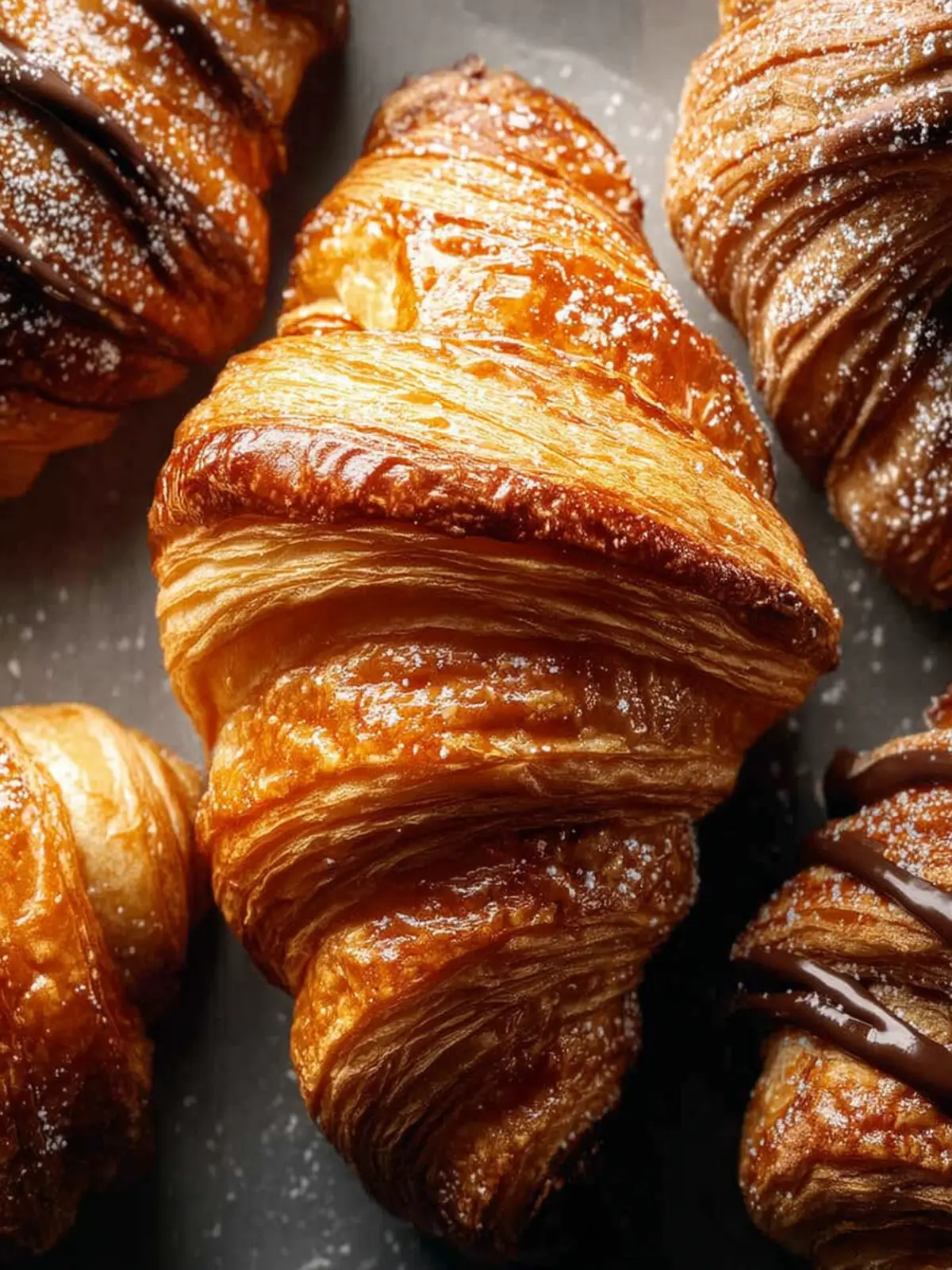
Imagine waking up early on a Sunday morning, the sun spilling golden light across your kitchen as you prepare to create the best homemade croissant recipe. This isn’t just about baking; it’s an experience, a ritual that transforms humble ingredients into flaky, buttery delicacies that are a joy to savor. The delicate layers of a croissant, achieved through a meticulous process known as lamination, are worth every minute spent in the kitchen. The aroma of freshly baked croissants quickly fills your home, making it impossible to resist indulging.
So, what makes homemade croissants so delectable? First and foremost, it’s the quality of ingredients and the love that goes into every fold and roll. Unlike store-bought varieties, which can often taste bland or overly sweet, homemade croissants boast that glorious balance of flavors and textures. The crispy exterior gives way to a soft, airy interior, creating a delightful contrast that is both satisfying and comforting.
Exploring What Makes This Recipe Special
-
Butter: Using quality European-style butter, known for its higher fat content, makes a significant difference. The rich, creamy flavor elevates the croissant to new heights, ensuring those layers are both flaky and indulgently buttery.
-
Fresh Yeast: Fresh yeast is a key player in this recipe, bringing that distinctive rise and airy texture. It creates the perfect environment for the dough to bloom in the oven.
-
Cold Ingredients: Every croissant recipe worth its salt emphasizes temperature control. Keeping your ingredients cold ensures that the butter remains solid as you laminate the dough, leading to those coveted layers.
-
Time and Patience: Perhaps the most crucial aspect is the time you dedicate to the process. Croissant-making requires patience, with resting periods between folding and rolling. Each turn adds to the layers, creating that signature flakiness you crave with every bite.
As you embark on this croissant-making journey, not only will you learn a skill, but you’ll also be rewarded with delicious pastries that can turn an ordinary morning into a special occasion. Grab your apron, and let’s dive into making the best homemade croissant recipe together!
Key Ingredients for The Best Homemade Croissant Recipe
Making the best homemade croissant recipe requires the right ingredients to ensure your pastries are light, flaky, and utterly scrumptious. Each component plays a vital role in achieving that perfect texture and flavor.
-
Flour: A high-quality all-purpose flour is essential. It provides the structure necessary for those delightful layers. Some bakers prefer bread flour for its higher protein content, which yields a chewier croissant.
-
Butter: Use unsalted butter that’s cold. Rich and flavorful, butter is the star of this recipe—it creates that desired flakiness when folded into the dough. The cold butter layers meld perfectly during baking, giving rise to those iconic flaky textures.
-
Yeast: Fresh or active dry yeast brings life to your dough. It’s the magical ingredient that allows your croissants to rise beautifully, making them light and airy.
-
Milk: Whole milk adds richness and moisture, helping the croissants achieve a tender crumb.
-
Sugar: A touch of sugar not only sweetens but also aids in browning, giving your croissants that lovely golden crust.
-
Salt: Essential for flavor, salt balances the sweetness and enhances all the other ingredients.
With these key ingredients in mind, you’re on your way to crafting the best homemade croissants that will impress family and friends alike!
Why You’ll Love This Homemade Croissant Recipe
Homemade croissants have a way of making an ordinary morning feel extraordinary. Imagine pulling a freshly baked batch out of the oven, their flaky, golden-brown layers beckoning you with a warm, buttery aroma. This is exactly what you can expect from the best homemade croissant recipe, a delightful endeavor that’s well worth your effort.
A Journey to Flaky Perfection
The beauty of making croissants at home lies in the process. While it may seem daunting, the method of enveloping cold butter within the dough creates those signature layers that you just can’t replicate with store-bought versions. As you roll and fold the dough, you’re not only crafting something delectable but also engaging in a culinary tradition that dates back centuries.
Fresh Ingredients Make All the Difference
Using high-quality ingredients elevates the entire experience:
- Flour: Opt for all-purpose flour with a higher protein content to provide the necessary structure.
- Butter: Real butter is essential; it melts and creates that flaky texture. Avoid margarine, which won’t give you the same results.
- Yeast: Fresh yeast ensures your croissants rise beautifully, creating that light, airy interior.
- Milk: Whole milk contributes moisture and richness, enhancing flavor in every bite.
Taking the plunge into homemade croissants means enjoying each layer with pride, knowing you have crafted something truly special.

Tips for Making Perfect Homemade Croissants
Creating the best homemade croissant recipe is an art, and with a few expert tips, you can master this delightful pastry in no time. Each step is essential in crafting that golden, flaky exterior and soft, buttery interior that makes croissants so irresistible. Here’s how to elevate your baking game:
Start with Quality Ingredients
- Flour: Choose all-purpose or bread flour for a sturdy structure. High-protein flour develops better gluten, giving the croissant its classic chew.
- Butter: Use unsalted, high-fat butter. The quality of butter impacts the flavor and lamination process. European butter is an excellent choice for its richness.
Manage Temperature
- Keep your ingredients, especially butter, cold. This helps maintain defined layers during the lamination process. If your dough warms up too much, the butter can melt, ruining those flaky layers.
Perfect Your Technique
- Lamination: Roll and fold the dough correctly to create sufficient layers. The classic “turns” method is crucial for developing the croissant’s signature rise.
- Resting: Allow the dough to rest between lamination steps. This relaxes the gluten, making it easier to roll out in subsequent turns.
Monitor Baking
- Bake until golden brown. Croissants should have a deep, rich color without burning. Use a thermometer to check that the internal temperature reaches 190°F.
By following these tips, you can look forward to serving up the best homemade croissant recipe that will impress your friends and family alike!
Time Details for The Best Homemade Croissant Recipe
Making the best homemade croissant recipe may require some patience, but the end result is worth every second spent in the kitchen. Here’s a quick breakdown of the timing involved:
Preparation time
Expect to spend about 20-30 minutes on preparation. This includes mixing the dough, incorporating the butter, and rolling it out.
Resting time
Allow for a substantial resting time of 4-6 hours, divided into several stages. This includes chilling the dough and letting it rise, which is crucial for achieving those flaky layers.
Baking time
Your croissants will need approximately 15-20 minutes in the oven. Keep an eye on them as they bake to ensure they achieve a beautiful golden-brown color.
Total time
In total, you’re looking at around 5-7 hours from start to finish, predominantly due to the resting periods. Though it may seem lengthy, the aroma and taste of your freshly baked croissants will make it all worthwhile!

Nutritional Information for The Best Homemade Croissant Recipe
Crafting the best homemade croissant recipe is not only an indulgent experience but one that also nourishes you. Let’s break down what each flaky layer brings to the table!
Calories
On average, one croissant contains about 200-250 calories, making it a delightful treat while still being mindful of your daily intake.
Protein
A typical homemade croissant offers around 4-5 grams of protein. While it’s not a protein powerhouse, pairing it with toppings like cheese or ham can boost this number significantly.
Carbohydrates
You’ll find approximately 25-30 grams of carbohydrates in each croissant. Most of these come from the flour, providing a quick source of energy to kickstart your day.
Fat
The rich, buttery goodness comes with about 12-15 grams of fat per croissant. While a delicious source of flavor, it’s important to enjoy them in moderation, especially in a balanced diet.
FAQs about The Best Homemade Croissant Recipe
When embarking on the journey to create the best homemade croissant, questions are bound to pop up. Here are some common queries and helpful answers to ensure your croissant-making adventure is a success!
Can I make these croissants in advance?
Absolutely! You can prepare your dough and shape the croissants ahead of time. After shaping, place them on a baking sheet, cover with plastic wrap, and refrigerate overnight. The next day, simply let them rise at room temperature before baking. This makes for a delightful breakfast without the morning rush!
How do I store leftover croissants?
To keep your delicious croissants fresh, store them in an airtight container at room temperature for up to two days. If you want to keep them longer, consider freezing them. Wrap each croissant in plastic wrap, then place them in a freezer bag. They’ll be good for up to a month. Just reheat in the oven for that fresh-baked taste!
What can I fill the croissants with?
The beauty of homemade croissants lies in their versatility! You can fill them with:
- Chocolate: A classic choice made with chocolate chunks or spreads.
- Almond paste: For a delightful nutty flavor.
- Savory fillings: Think ham and cheese or spinach and feta.
- Fruit preserves: Apricot or raspberry jam adds a sweet touch.
Get creative and discover your personal favorites!
What if my dough doesn’t rise?
If your dough isn’t rising, it could be due to several factors:
- Yeast: Ensure your yeast is active. If using dry yeast, proof it in warm water with sugar before mixing it with your dry ingredients.
- Temperature: The dough might be too cold. Let it rise in a warm place, covered, to encourage fermentation.
- Timing: Make sure you’ve given it enough time to rise. Often, a longer rise can work wonders!
Don’t be discouraged; even if it seems off, you can still bake beautiful croissants!
Conclusion on The Best Homemade Croissant Recipe
Crafting the best homemade croissant recipe is truly a rewarding experience. The flaky layers, buttery aroma, and golden-brown crust will transport you straight to a Parisian bakery in your own kitchen. With a little patience and practice, you can master this delightful pastry. Remember to embrace the process, as each fold and layer brings you closer to your perfect croissant. Don’t hesitate to share your creations with family and friends—your efforts will surely impress! So roll up your sleeves, gather your ingredients, and bring a little piece of France to your breakfast table. Your croissant adventure awaits!
Print
Classic Croissants
- Total Time: 12 hours 40 minutes
- Yield: 14-16 croissants 1x
- Diet: Vegetarian
Description
Delicious homemade croissants with flaky layers.
Ingredients
Scale
- 4 cups all-purpose flour (T45)
- 1/4 cup + 1 tbsp sugar
- 3 1/4 tsp active dry yeast
- 6 1/2 tbsp milk, cold
- 7 tbsp unsalted butter, at room temperature
- 2 tsp salt
- 1/2 cup + 1 tsp cold water
- 1 cup + 2 tbsp unsalted butter, cold
- 1 egg
- 1 egg yolk
Instructions
- In a large mixing bowl, with a stand or handheld mixer fitted with a dough hook, stir together flour, sugar, yeast, milk, soft butter, and salt. Stir on low speed until it starts to come together. Slowly add water while mixing the dough. Knead on medium-low speed for 10 minutes. Shape the dough into a 9 inches (25x17cm) rectangle. Wrap tightly with plastic foil and refrigerate overnight (8-12 hours).
- Place the cold butter between 2 pieces of parchment or wax paper. With a rolling pin, pound butter into a 7 inches (18x18cm) rectangle. Straighten the sides with the outer edges of your hands by pushing towards the center. Roll evenly thick. Cover with plastic wrap and freeze butter and the croissant dough for 20 minutes.
- Remove dough from the freezer and roll on a very lightly floured surface with a very lightly floured rolling pin into a 15×7 inches (38×20 cm) rectangle, 0 inches (7-8mm) thick. Place butter slab on one half of the croissant dough so that there is about 0 inches space around three edges and fold the other dough-half over the butter. Completely seal the butter inside the dough by pressing the edges together. Make sure that there are no air bubbles between the layers. Rotate 90°.
- Just use as much flour as needed that the dough doesn’t stick. Firmly but carefully press the dough with the rolling pin starting on both sealed ends. Then stop pressing and begin rolling the dough. Be careful and don’t work the dough over that the butter doesn’t incorporate with the dough. Roll the croissant dough just in one direction into a 15×7 inches (38×20 cm) rectangle, 0 inches (7-8mm) thick. Rotate the dough 180° while rolling to keep it even, if needed. Make sure that you lengthen the dough instead of widening it and keep the edges as straight as possible. Shape the corners with your hands to a square.
- Remove all excess flour from the dough before folding it, if there is any. Take one short side and fold one-third of the dough over itself that about 2/3 of the dough is covered by itself. Then take the other short side and flap it over itself that it touches the edge of the previously folded part. The croissant dough has now 1/3 of its original size. Then fold it in half. You should have a rectangle with 4 layers of dough. Be sure that you remove all excess flour between each layer. Cover with plastic foil tightly and freeze for 30 minutes.
- Roll the dough in the direction of the two open ends with the fold to your right until it is a 15×7 inches (38×20 cm) rectangle, 0 inches (7-8mm) thick. Be careful, not to overwork the dough and take as little flour as possible. Keep the edges as straight as possible. Rotate 180° while rolling to stay even, if needed. Pick up one short end and fold one-third of the dough on itself. Pick up the other short end and fold on top that it covers itself (letter style). You should have a 3-layered dough. Cover with plastic foil tightly and freeze for 30 minutes.
- Turn the dough again by 90° from the previous position, and roll into a 26×10 inches (66x27cm) rectangle, 0 inches (3-4mm) thick. And again, take as little flour as possible, keep the edges as straight as possible, and don’t overwork the dough. Shape the corners with your hands to a square.
- With a sharp knife or pizza cutter, cut off 0 inches all around the rectangle to reveal the multilayered puff pastry. The croissant dough should be 25 inches (64x25cm) in size. Transform it into a parallelogram by picking up 2 corners of the dough opposite the diagonal and stretch gently. Use a tape measure or yardstick and measure both long sides of the dough (should be still 25 inches / 64cm) and divide each side through 7-8. This makes sure that your croissants are all the same size. Depending on your parallelogram and the precision of your cut, you get 14 or 16 croissants. Then cut triangles with the tape measure. The cut croissants should be between 3 inches (8-9cm) wide and 9 inches (25cm) long. Cover with plastic foil and freeze for 15 minutes.
- Line 3 baking sheets with parchment paper. Set aside.
- Remove croissants from the freezer and cut with a knife 0 (5mm) slits in the middle of the short sides. Place croissants with the notched side towards you. Roll the dough up and away from you, moving your hands outward from the center. Lightly press the tip to close the croissants. Place croissants on prepared baking sheets (a maximum of 6 croissants per baking sheet) with enough space between each croissant. They will triple in size. Place the dough tip underneath that they don’t unroll during baking.
- Combine egg and egg yolk in a small bowl and lightly brush croissants. Your oven should have a temperature of 80-85°F (26-29°C). Maybe you need to open the door for 1-2 minutes if it is warmer than that.
- Pour boiling water in a heat-proof bowl. Arrange all baking sheets in the oven and the boiling water on the bottom of the oven. Close the door and let the croissants rise for 2 hours. This trick can simulate a professional oven. It lets the croissants rise high and prevents them from drying out.
- Remove croissants from the oven and preheat to 375°F (190°C). Carefully brush croissants a second time with eggs. Bake one sheet at the time for about 16-20 minutes until they have a brown and even color. Let cool on the baking sheets for 5 minutes then transfer to a wire rack to cool completely. Even if the croissants are best eaten fresh on the same day, you can store them in an airtight container at room temperature up to 3 days. Dip or drizzle with chocolate, dust with powdered sugar, or fill to your taste, if desired.
Notes
- For best results, make sure to refrigerate the dough overnight.
- Keep the butter cold and handle the dough gently to achieve flaky layers.
- Prep Time: 20 minutes
- Cook Time: 20 minutes
- Category: Breakfast
- Method: Baking
- Cuisine: French
Nutrition
- Serving Size: 1 croissant
- Calories: 250
- Sugar: 4g
- Sodium: 220mg
- Fat: 15g
- Saturated Fat: 10g
- Unsaturated Fat: 5g
- Trans Fat: 0g
- Carbohydrates: 25g
- Fiber: 1g
- Protein: 5g
- Cholesterol: 40mg